When people hear the term Building Information Modeling (BIM), they often picture a detailed 3D model of a building. While visualization is certainly one of BIM’s strengths, it’s only a small part of what makes BIM such a valuable tool in today’s construction industry.
The true power of BIM lies in the information it contains and the way that information supports coordination, communication, and decision-making throughout a project.
Beyond Visualization
A BIM model is much more than a digital representation of a building. It provides a shared environment where architects, engineers, contractors, fabricators, and project managers can work from the same coordinated source of information.
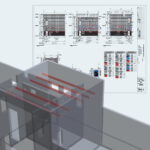
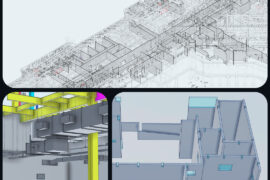
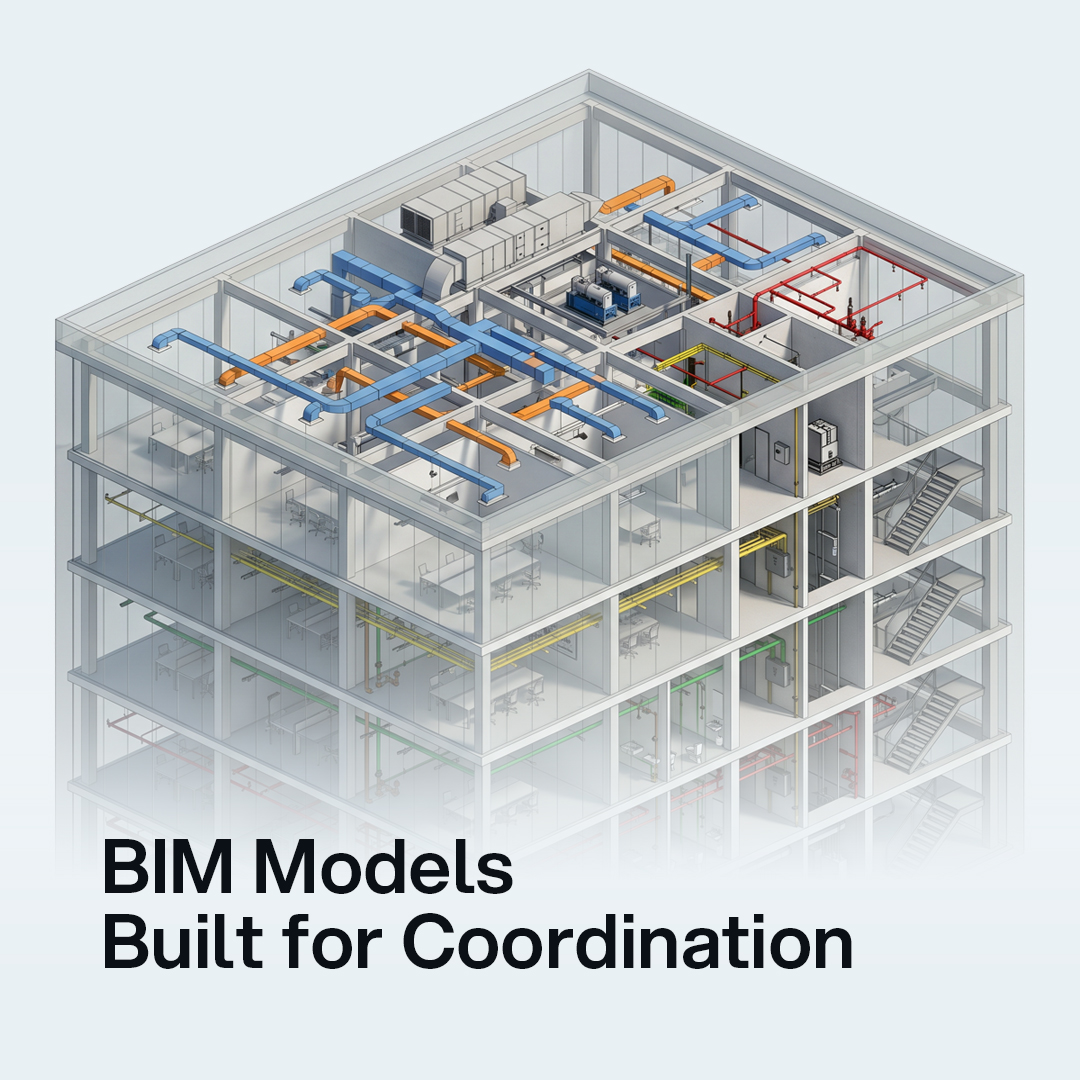
Instead of relying solely on separate drawings from different disciplines, project teams can review structural, architectural, mechanical, electrical, and plumbing systems together within a single model. This makes it easier to understand how building systems interact and identify potential conflicts before construction begins.
Better Coordination Means Better Projects
One of the greatest advantages of BIM is its ability to improve coordination.
When every discipline works from coordinated models, teams can:
- Detect clashes before they become costly field issues.
- Improve communication between project stakeholders.
- Reduce rework and construction delays.
- Support more accurate shop drawings and fabrication.
- Make better-informed decisions throughout design and construction.
A well-coordinated BIM model allows everyone involved in the project to understand not only what is being built, but also how every component fits together.
BIM Models Built for Coordination
At IDRAWPRO, we develop coordination-ready BIM models in Autodesk Revit that are designed to support real project workflows—not just create attractive 3D visuals.
Our models serve as a reliable foundation for:
- Multi-discipline coordination
- Construction documentation
- Shop drawing development
- Clash detection
- Project communication
- Ongoing design reviews
By creating accurate, organized, and coordinated models, we help project teams work more efficiently and reduce uncertainty before work reaches the jobsite.
Information That Supports Better Decisions
The value of BIM increases when it becomes a dependable source of project information.
Throughout every phase of construction, coordinated BIM models help stakeholders evaluate design options, understand system relationships, and resolve issues before they impact schedules or budgets.
Rather than simply displaying geometry, a well-developed BIM model becomes a practical decision-making tool that supports collaboration across the entire project team.
The Real Value of BIM
Visualization may be what first captures attention, but coordination is what delivers lasting value.
When BIM models are developed with coordination at their core, they become an essential resource for improving communication, reducing risk, and helping construction teams make informed decisions from planning through project completion.
At IDRAWPRO, our goal is to create BIM models that do more than represent a building—they help build better projects.